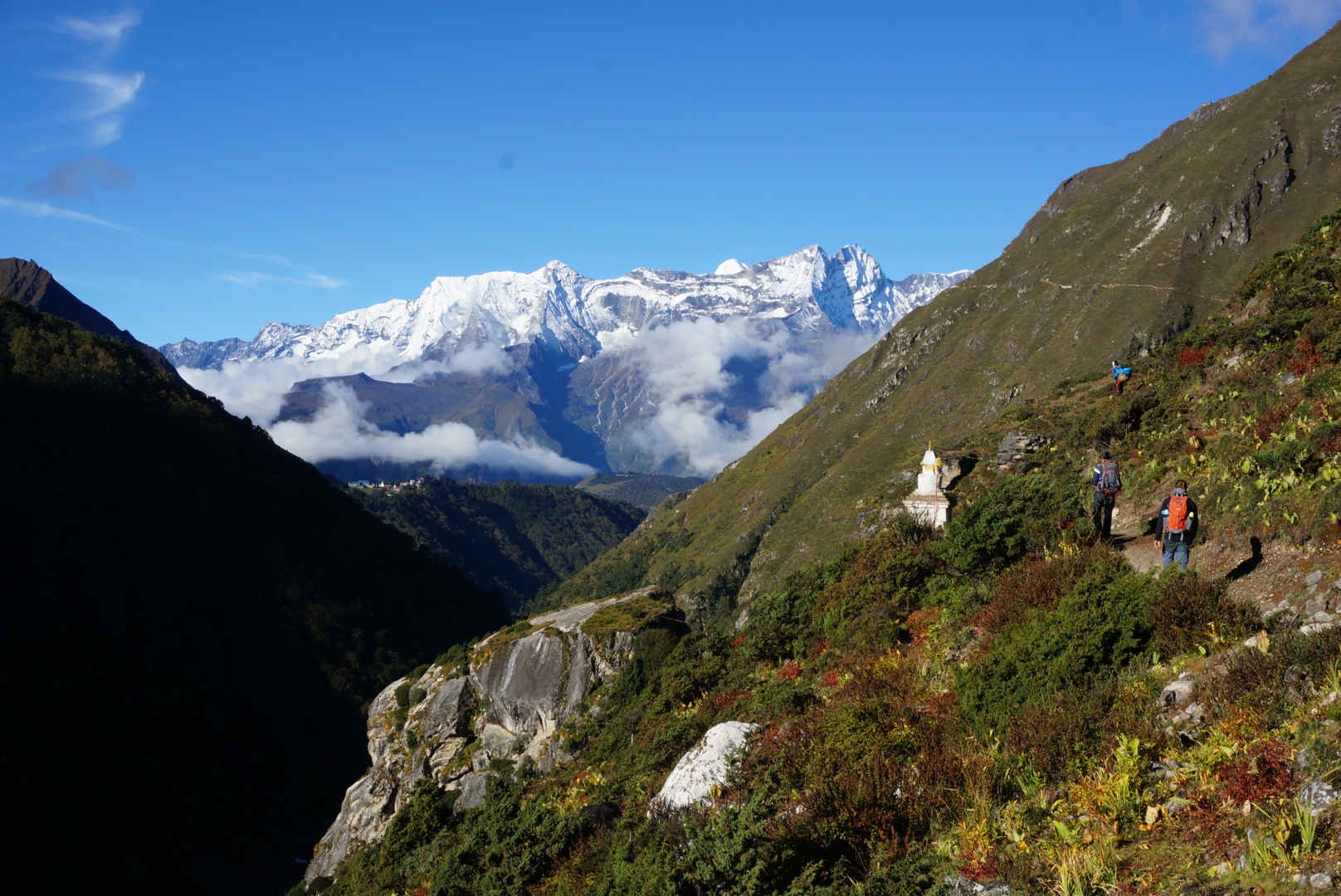
This entry is written to get a quick idea of how Everest Base Camp trekking is, or at least how it was for us.
Choosing trek and agency
When we came to Kathmandu, we were not sure about our plans. We had decided to go on a trek and arrange it via agency, which is the most convenient way. We had researched and chosen a couple of agencies based on recommendations by people we know and Internet. In addition we had to endure the hard sells of treks in taxi, hotel, streets – practically everywhere in Kathmandu. In the end we decided to go with Himalayan Heart, and the decision made our life in Kathmandu much easier.
We decided in the end to go to Everest region. First we were thinking about Annapurna circuit, mostly for being a circuit, but then we learned that you can do kind of a circuit in Everest region by going through a high Chola pass to Gokyo lakes and going down from there. That was the plan we made with the agency. The trek was supposed to be 16 days and cost us 1375$/person. This is much cheaper than a trek you’ll get by booking on Internet, but in hindsight we suspect that we probably still overpaid.
Guide and porter
Guide and porter are optional, but especially guide is quite useful. Our guide was Rajendra Panta, and he was great, handling everything for us (flights, accomodation, food orders etc) and answering most of the questions we had (how much a porter can carry, what is the yak shit for, what does Ama Dablam mean etc). If you ever want to trek with him, you can contact him via email: rajendrapanta@hotmail.com.
We saw a lot of people without porters. But here are a couple of things to consider when decision about porters. First, if you are not used to trekking in high altitudes, it is hard even without many kilos on your back. Second, Nepal is a poor country depending heavily on tourists, so giving job to locals is valuable. Third, most of guides start as porters to gain experience in the mountains, and, why not, learn some English. Prakash, our porter, didn’t seem so interested about the last, but the work didn’t seem to be a burden to him.
One thing to remember about guides and porters is that even though in Nepal tipping is not customary, here some tips are on place.
Accomodation & food
Accomodation in the mountains is cheap. The setting is really simple and almost exactly the same in all the tea houses – own bedroom with two beds (with pillows and blankets, no sheets necessarily) and electric light (sometimes pretty dim), shared toilet (with no toilet paper), and a common room / dining area.
Tea houses require you to also to eat there (or pay more for the room). As there are not so many restaurant options, it’s ok. Most of the tea houses offer essentially same dishes. One of the most attractive features of the region is that it is pristine, there are no roads or cars. Downside to this is that logistics are not easy, food needs to be carried by porters and yaks (in lower areas also donkeys). So, eating meat might not be very recommendable. If you want to eat local products, they have good potato and also some cabbage and carrots. Avoiding meat makes options pretty limited – we had mostly dal bhat, veg rice, veg noodles, veg soup and veg potato. For breakfast we ate mostly Tibetan bread.
Accomodation and food was included in our trek cost, but the drinks we had to buy ourselves. Also drinks are more expensive in the mountains, since every bottle and every can is brought by a porter. For comparison black tea was around 60-100 rupees and a can of beer 500-700 rupees. We saw people carrying big loads of beer (surprising, since it is not recommended to drink alcohol in high altitudes). At first we drank tap water that we cleaned with purifying tablets, but after the stomach issues we started to buy bottled water (environmentally not a good option since all those bottles need to be carried back down). Otherwise we drank mostly tea and so called hot lemon.
Day rhythm
We woke up early, usually around six. Best walking hours were usually before noon, since after that clouds started to get bigger and the visibility and views were not so good. Most of the days we walked for four hours (ranging from 2,5 to 8 hours), after which we had lunch at a tea house and lots of spare time. In Namche and Dingbuche they offered movies in bars and bakeries, but in smaller places there was not so much to do. So it’s important to bring books and light games (cards, Uno, Yatzy) with you. That’s also why we usually went to sleep early, and woke up early.
Equipment
We had a lot of stuff with us but we also bought and rented more. Here is a list of equipment we had with us:
- small backpack ( For day use. Usually we carried with us water, some snacks, wind and rain jackets, camera, hygiene equipment and medical kit. All other stuff was carried by our porter.)
- Hiking gear (good, sturdy shoes and hiking pants. Hiking poles are not really necessary unless your knees are hurting or you feel very tired, Raj had one in case)
- sleeping bag (It gets pretty cold at nights but not so necessary in the time of year we went cause almost all the tea houses provide warm blankets),
- toilet paper
- spare t-shirts, socks and underwear
- warm hoodie / fleece jacket (very useful in the evenings)
- down jacket, gloves and a warm beanie ( not so useful equipment at The time we were there. We only used them once at Kala Patthar.)
- Power banks (it costs about 300-500 rupees for a recharge)
- Head lamp (useful for wandering to the shared bathroom at night and climbing to Kala Patthar at 4.30 am)
- playing cards, books and pen and paper for notes.
Why to go/not to go to Everest?
It is easy to come up with reasons why to go to Everest region. The most obvious reason are the magnificent views and the mere fact that visiting the base camp of the world’s highest mountain, Everest or as Sherpas call it, Chomolungma, is really cool. Additionally, The area definitely has its own identity with the small Sherpa villages, yak traffic instead of cars and clear presence of Tibetan Buddhism. Despite all the tourism there is something very authentic and attractive about it.
Base Camp is probably reachable for anyone with healthy legs and attitude. But a couple of words about risks. Firstly, there is a risk of AMS or accute altitude sickness. It is dangerous and to be honest, it was a little worrying to hear rescue helicopters soar there and back with those who could not get down by themselves. Though Raj said that some use their insurance to get down with a helicopter if they feel lazy about walking down.
Even without the extreme form of the sickness, the altitude has its effects – bad quality of sleep, heavy breathing, stomach issues, headaches etc. This combined with hard ascents make the acute attitude sickness more likely than the first one. If you want to enjoy the wonderful views without problems posed by altitude, keep below the treeline (4000m). Many do go only till Tengbuche, which is a perfectly fine and beautiful treck by itself. Also, if you always choose elevator over stairs, you probably won’t like Everest (or Nepal in general, for that matter).
We can’t really make comparisons to Annapurna region, for example, but we feel that Everest was a fine example of Himalaya trekking and an amazing experience. Also, we were really happy that we went there a little bit before the season started and the track was filled with tourists.
 Travelling bunheads